
Copyright (c) 2026 Revista Panameña de Ciencias Sociales

This work is licensed under a Creative Commons Attribution-NonCommercial-ShareAlike 4.0 International License.
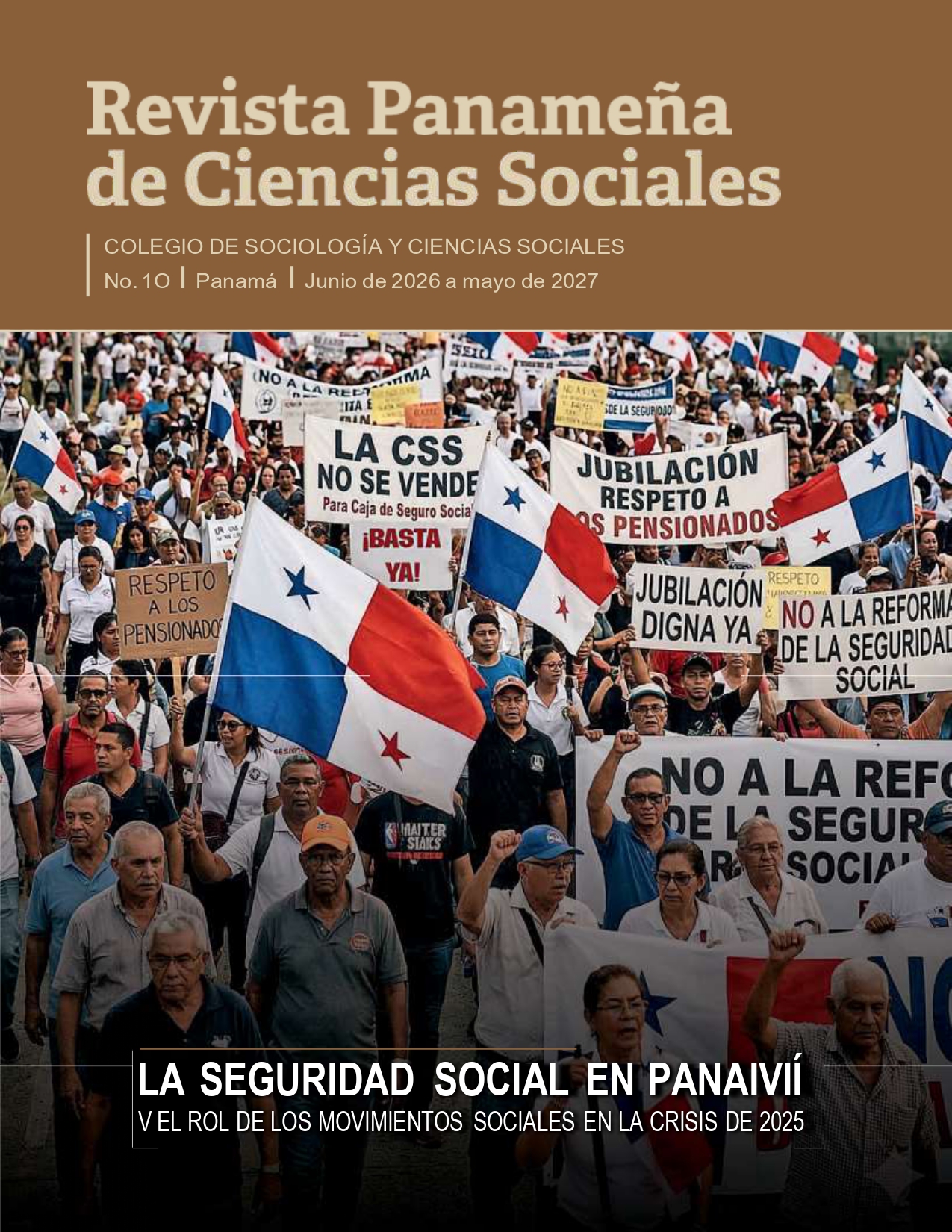
This article analyzes the historical, political, and structural process of social security reforms in Panama, culminating in the approval of Law 462 of 2025, which amends Organic Law 51 of the Social Security Fund (CSS). Using a historical-critical approach, it examines the evolution of the solidarity-based model established in 1941, its transformation during the neoliberal reforms of the 1990s, and the progressive dismantling of the public social protection system. Social security is contextualized within the framework of international standards promoted by the ILO, highlighting its principles of solidarity, universality, and tripartite financing. Based on this framework, the defined benefit and individual account models are compared. The social conflict of 2025 is documented, including prolonged strikes, the prosecution of leaders, widespread labor disruptions, and allegations of human rights violations. It also presents an economic assessment that estimates sectoral losses without compromising overall GDP growth, along with an actuarial exercise that verifies the sustainability of the solidarity-based model until 2095. A comparison of pensions demonstrates that individual accounts will produce replacement rates of less than 30%, resulting in insufficient pensions and exacerbating social inequalities. The report concludes that the reform constitutes a regressive structural change that weakens social cohesion and deepens the commodification of the right to social security.