

Copyright (c) 2026 Revista Panameña de Ciencias Sociales

This work is licensed under a Creative Commons Attribution-NonCommercial-ShareAlike 4.0 International License.
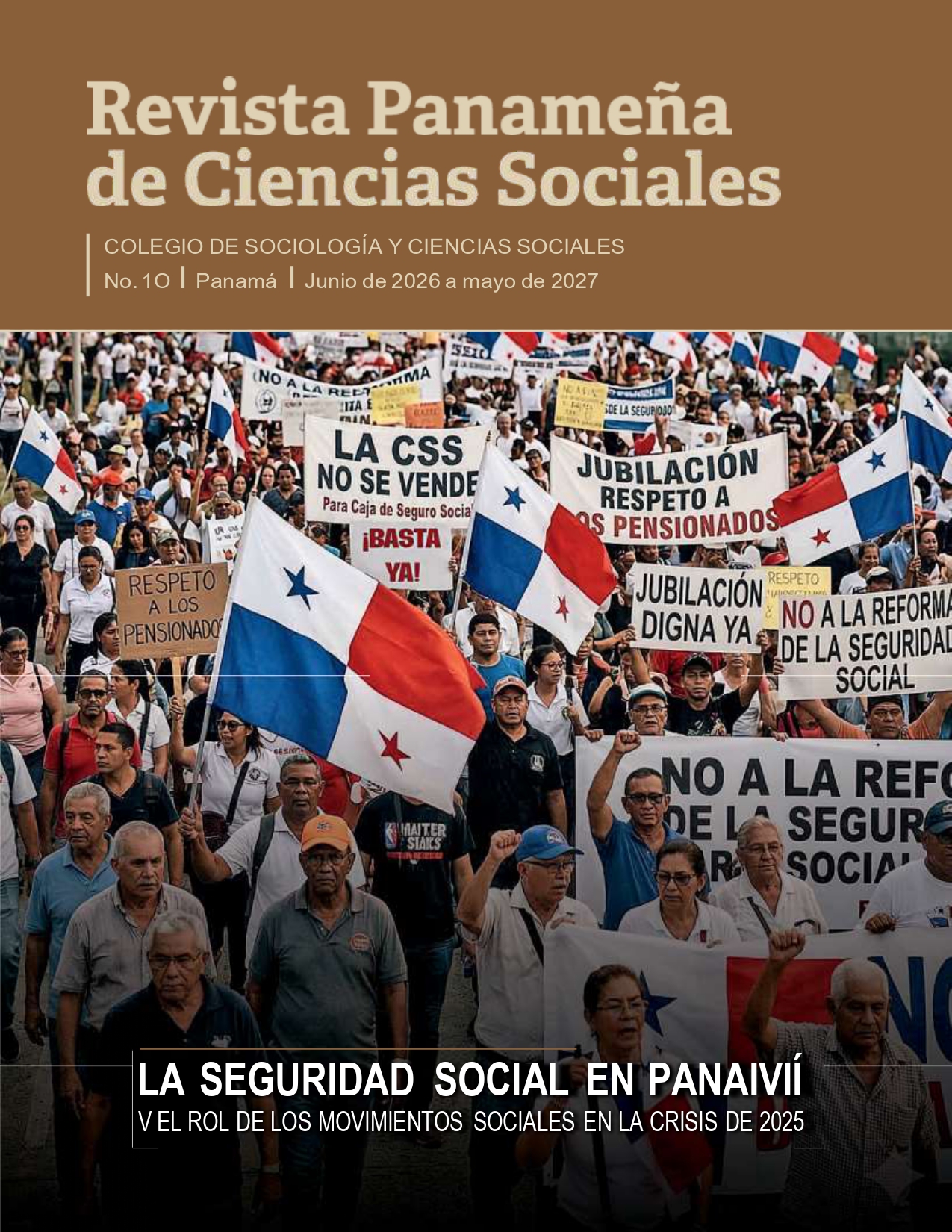
The extraordinary events that took place in Panama during April and June of 2025, while they may seem exceptional, are a logical consequence of the crisis of the global capitalist system. In this sense, they are linked to other similar events that have occurred around the world and in Latin America, such as the youth uprisings in Chile and Colombia in recent years, the struggles of the Ecuadorian indigenous people of CONAIE, the democratic mobilizations in Honduras and Guatemala, and the popular insurrection in Nicaragua against the pension system reform imposed by the IMF in 2018. The causes of the social explosion experienced by the Panamanian population are rooted in deep structural problems inherited from the country’s history; that is, the way in which Panama has been integrated into the global capitalist market since the 16th century (transitionism), exacerbated by 40 years of capitalist decline under neoliberal policies. Thus, the internal imbalances imposed by the allocation of the goods transit region defined from the centers of hegemonic power have worsened the situation of inequality imposed by neoliberal capitalism on its inhabitants.

Este obra está bajo una licencia de Creative Commons Reconocimiento-NoComercial-CompartirIgual 4.0 Internacional.


