
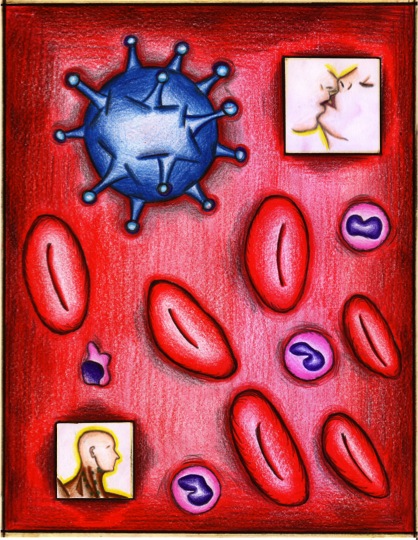
Chronic active Epstein Barr virus infection is poorly diagnosed and has high morbidmortality, therefore here is an attempt to review what has been reported in the literature. Epstein Barr is a double-stranded DNA virus, belongs to the family Herpesviridae, contains an icosahedral nucleocapsid and membrane, remains latent in B-cells and replicate in its nucleus.The chronic active infection by this virus is defined in three criteria: Symptoms similar to infectious mononucleosis persistent or recurrent for more than six months; unusual patterns of antibodies against Epstein Barr; increase of antibodies against the Epstein Barr capsid antigen and antibodies against early antigen and/or detection of an increment of the viral genoma in affected tissues; chronic disease that is unexplainable at the time of diagnosis.Treatment regimens have not been established so far.

Downloads
Download data is not yet available.
References
Kimura H, Morishima T, Kanegane H, Ohga S, Hoshino Y, Maeda A, et al. Prognostic Factors for Chronic Active Epstein-Barr Virus. The Journal of Infectious Diseases. 2003;187:527–33.
Cho S, Kim HS, Park HC, Ahn MJ, Yiul LY, Park KC. A case of severe chronic active Epstein-Barr virus infection with T-cell lymphoproliferative disorder. The Korean Journal of Internal Medicine. 2004;19:124-127.
Hurt C, Tammaro D. Diagnostic Evaluation of Mononucleosis-Like Illnesses. The American Journal of Medicine. 2007;120:911.e1-911.e8.
Cohen J. Epstein-Barr virus infection. NEJM. September 3, 2009;343(7):481-492.
Okano M, Kawa K, Kimura H, Yachie A, Wakiguchi H, Maeda A, et al. Proposed Guidelines for Diagnosing Chronic Active Epstein-Barr Virus Infection. American Journal of Hematology. 2005;80:64–69.
Kimura H, Hoshino Y, Hara S, Sugaya N, Kawada J, Shibata Y, et al. Differences between T Cell–Type and Natural Killer Cell–Type Chronic Active Epstein-Barr Virus Infection. The Journal of Infectious Diseases. 2005;191:531–9.
Lu G, Xie Z, Zhao S, Ye L, Wu RH, Liu CY, et al. Clinical analysis and follow-up study of chronic active Epstein-Barr virus infection in 53 pediatric cases. Chin Med J. 2009;122(3):262-266.
Dagdemir A, Tasdemir HA, Dilber C, Gok F, Kubar A. Increased Intracranial Pressure Due to Chronic Active Epstein-Barr Virus Infection. Pediatr Neurol. 2006;35:352-355.
Gottschalk S. Clinical and Virological Characteristics of Patients with Chronic Active Epstein-Barr Virus Infection Treated with Hematopoietic Stem Cell Transplantation: Insights and Questions. Clinical Infectious Diseases. 2008;46:1535–6.
Seki H, Igarashi N, Maruhashi K, Katayama K, Katoh E, Terao G, et al. Infection VEB-associated hemophagocytic lymphohistiocytosis and chronic active VEB Differential cellular targets of Epstein-Barr virus infection between acute. Blood. 2001;98:1882-1888.
Lee JS, Kang JH, Lee GK, Park HJ. Treatment of Epstein-Barr Virus-Associated Hemophagocytic Lymphohistiocytosis with HLH-94 Protocol. J Korean Med Sci. 2005;20:209-14.
Gotoh K, Ito Y, Shibata-Watanabe Y, Kawada J, Takahashi Y, Yagasaki H, et al. Clinical and Virological Characteristics of 15 Patients with Chronic Active Epstein-Barr Virus Infection Treated with Hematopoietic Stem Cell Transplantation. Clinical Infectious Diseases. 2008;46:1525–34.
Cho EY, Kim KH, Kim WS, Yoo KH, Koo HH, Ko YH. The Spectrum of Epstein-Barr Virus-Associated Lymphoproliferative Disease in Korea: Incidence of Disease Entities by Age Groups. J Korean Med Sci. 2008;23:185-92.
Thorley-Lawson DA, Gross A. Persistence of the Epstein-Barr virus and the origins of associated lymphomas. N Engl J Med. 2004;350:1328.
Torre D, Tambini R. Acyclovir for treatment of infectious mononucleosis: a meta-analysis. Scand J Infect Dis. 1999;31:543.
Vetsika EK, Callan M. Infectious mononucleosis and Epstein-Barr virus. Expert Rev Mol Med. 2004;6:1.
Auwaerter PG. Recent advances in the understanding of infectious mononucleosis: are prospects improved for treatment or control? Expert Rev Anti Infect Ther. 2006;4:1039.
Rea TD, Russo JE, Katon W, Ashley RL. Prospective study of the natural history of infectious mononucleosis caused by Epstein-Barr virus. J Am Board Fam Pract. 2001;14:234.
Hurt C, Tammaro D. Diagnostic evaluation of mononucleosis-like illnesses. Am J Med. 2007;120:911.
Obel N, Hoier-Madsen M, Kangro H. Serological and clinical findings in patients with serological evidence of reactivated Epstein-Barr virus infection. APMIS. 1996;104:424.
Kimura H, Hoshino Y, Kanegane H, Tsuge I, Okamura T, Kawa K, et al. Clinical and virologic characteristics of chronic active Epstein-Barr virus infection. Blood. 2001;98:280-286.
Kasahara Y, Yachie A, Takei K, Kanegane C, Okada K, Ohta K, et al. Differential cellular targets of Epstein-Barr virus infection between acute VEB-associated hemophagocytic lymphohistiocytosis and chronic active VEB infection. Blood. 2001;98:1882-1888.

