
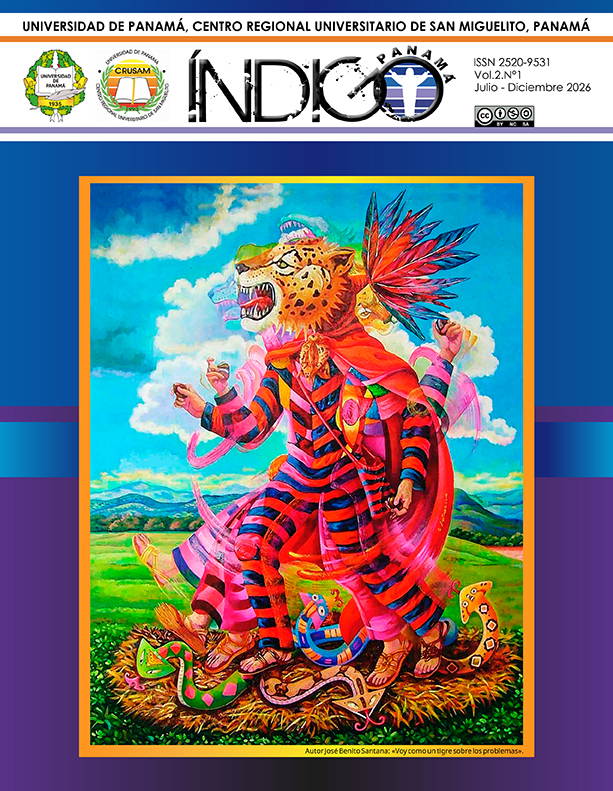
This article analyzes the artistic and methodological approach of Panamanian artist José Benito Santana Rodríguez, whose work represents a fundamental model within contemporary Panamanian art. To carry out this study, an iconographic analysis and a documentary biographical review of his works were conducted, examining in detail the thematic evolution and technical execution. It is evident that the artist achieves an aesthetic synthesis between surrealism, folkloric traditions, and the indigenous Ngäbe and Guna mythology. A transition toward an "ethnic-dreamlike surrealism" is identified, where the artist embodies local identity archetypes, such as the empollerada (woman in traditional dress), the Diablos Sucios (Dirty Devils), and the Pelea de Toros (bullfight). Technically, his rigorous mastery of pointillism stands out, employing dark bases and vibrant concentric dots that endow his canvases with remarkable visual dynamism. It is concluded that Santana articulates his own language that not only revalues ??Panamanian cultural identity, but also generates a profound sociocultural impact, reaffirmed by his teaching and academic work and his valuable contributions to the rescue of intangible and urban heritage.