
Copyright (c) 2024 Revista médico científica

This work is licensed under a Creative Commons Attribution-NonCommercial-ShareAlike 4.0 International License.
Introduction: Wegener’s Granulomatosis is a primary vaculitis syndrome that affects vessels of large and small caliber that manifests with renal and respiratory symptoms. In Latinamerica, the published literature is scant; the majority of researches and studies come from industrialized countries.
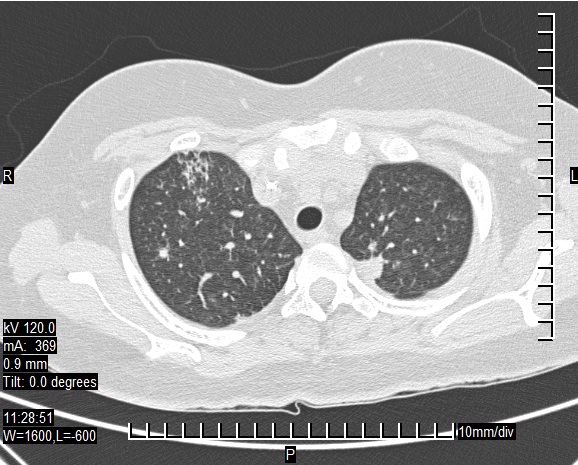
Clinical case: A 22 years old female with a history of chronic sinusitis refractory to medical treatment was studied. The original manifestation evolves over 2 months to bilateral otitis, accompanied of mastoiditis, bilateral conjunctivitis, shoulders/elbows/ankles arthralgias, general weakness and fatigue. Concomitantly, she presented non quantified fever and weight loss. Three weeks before being hospitalized, the patient referred odinofagia, lumbalgia, dysuria, colored urine and isolated epistaxis. Laboratories showed normocytic normochromic anemia, leukocytosis, thrombocytosis, aumented erythrocyte sedimentation, elevated creatinine and blood urea nitrogen, hematuria, proteinuria and antineutrophil cytoplasmic antibody against proteinase 3 positive. Chest computer axial tomography showed bilateral nodular infiltrate and right superior lobule cavitations. A biopsy showed sclerotic and crescentic glomerulus. Treatment with cyclophosphamide and methylprednisolone was instated under the strong suspicion of primary vaculitis syndrome improving symptoms and decreasing levels of antineutrophil cytoplasmic antibody against proteinase 3.
Discussion: The highly unspecific symptoms of the pathology had a myriad of differential diagnosis; however the clinical findings and laboratory results led to the sufficient criteria to diagnose Wegener’s Granulomatosis.