
Copyright (c) 2026 Journal of Agricultural Research

This work is licensed under a Creative Commons Attribution-NonCommercial-ShareAlike 4.0 International License.
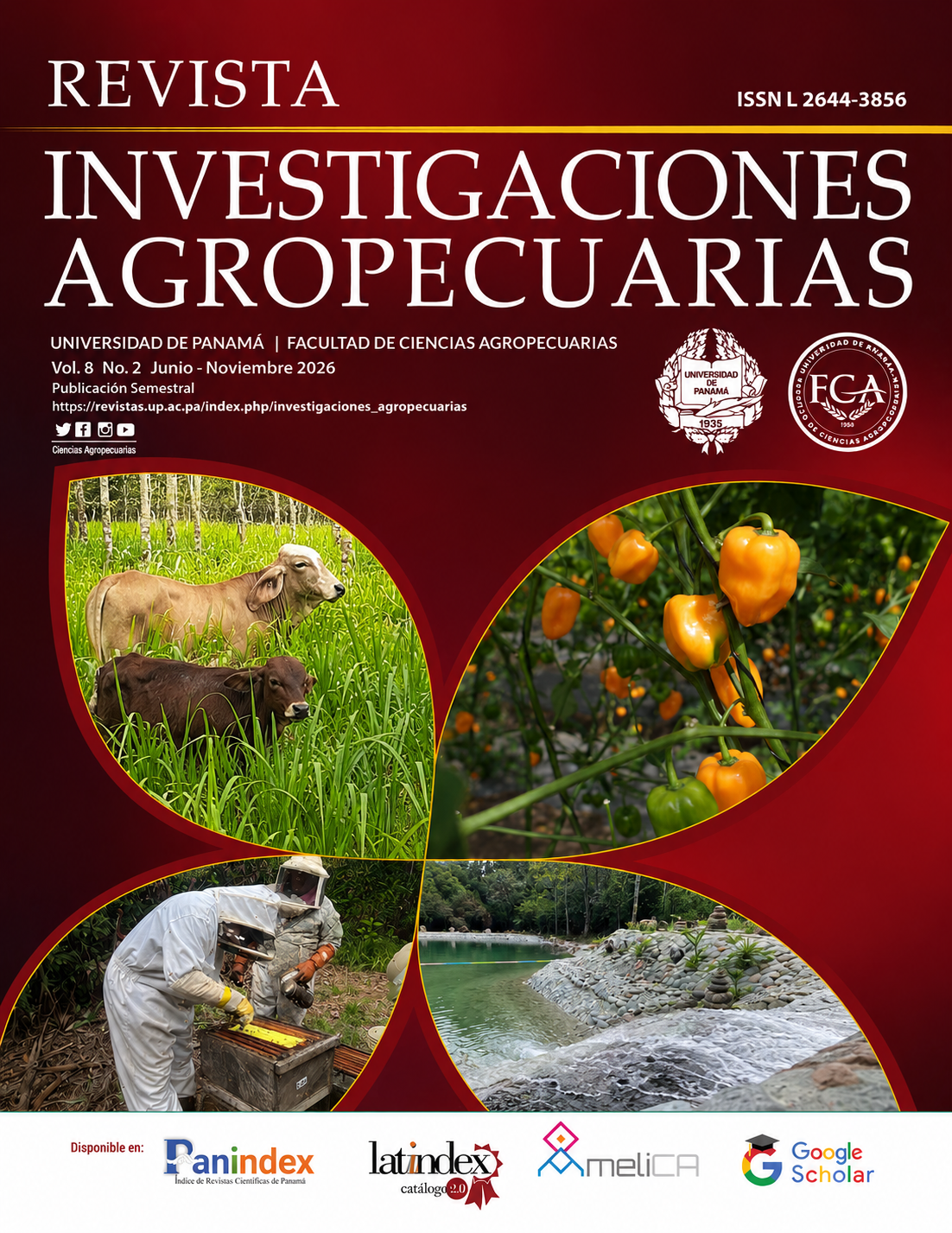
The habanero pepper (Capsicum chinense Jacq.) is an important vegetable for Mexico; however, its cultivation technology remains unknown under the conditions of the dry tropics of the central Pacific of Mexico. The objective of this research was to evaluate the development and yield of the hybrid habanero pepper 'Megalodon' by the application of biostimulants under greenhouse conditions. Three biostimulants were evaluated: Universal® (unicellular algae extract), Nutriplus® (amino acids), Stimplex® (Ascophyllum nodosum extract), and a control (without biostimulant). The agronomic variables were plant height, stem diameter, leaf area, and chlorophyll index; the yield variables were g plant-1, kg plant-1, and t ha-1; the fruit quality variables were weight, length, and width of the fruit. A completely randomized design was used, and data were analyzed by analysis of variance and Tukey's means test (p ? 0.05). Stimplex® and Universal® improved stem height and diameter, while Nutriplus® improved chlorophyll index. Neither did biostimulant increase yield, which averaged 11.93 t ha-1. Nonetheless, Nutriplus® improved fruit weight (1.56 g) and width (2.91 mm) of C. chinense. In conclusion, the amino acid-based biostimulant (Nutriplus®) is recommended for use in the cultivation of C. chinense if it is desired to improve fruit quality parameters (fruit weight and width).

Este obra está bajo una licencia de Creative Commons Reconocimiento-NoComercial-CompartirIgual 4.0 Internacional.